
Reproduction Parts for 1916-1964 Chevrolet Passenger Cars & 1918-1987 Chevrolet & GMC Trucks SHOP ONLINE | ONLINE CATALOG | ABOUT US

I’m in the process of rebuilding a 1938 216 that has been sitting in my shed for several years. After removing the head, I noticed that there is a somewhat irregular pattern of water outlets in the block—some of the holes in the head gasket, as well as in the head, do not have corresponding holes in the block; instead, there are obvious cavities that have been filled with weld. This certainly appears to have been done at the factory. I have rebuilt two other 216s, but many years ago, and I don’t recall noticing this pattern of water passages. I checked with a 1957 235 block that I have open, and the water passage holes are more regularly spaced and more numerous. FYI, the 216 has 9 holes that are roughly 7/16” in diameter, 7 that are 1/4” in diameter, and 2 in the center that are 3/16”.
I’m curious about this arrangement and the discrepancy between some of the head passages and those in the block. Were those “welded” holes originally casting ports for the cast iron? Or is there another story? Apparently, when designing the 235, Chevrolet engineers must have decided that the 216 design of water passages in the 216 block needed to be increased and more regularly spaced.
Thanks in advance for your thoughts.
Jim

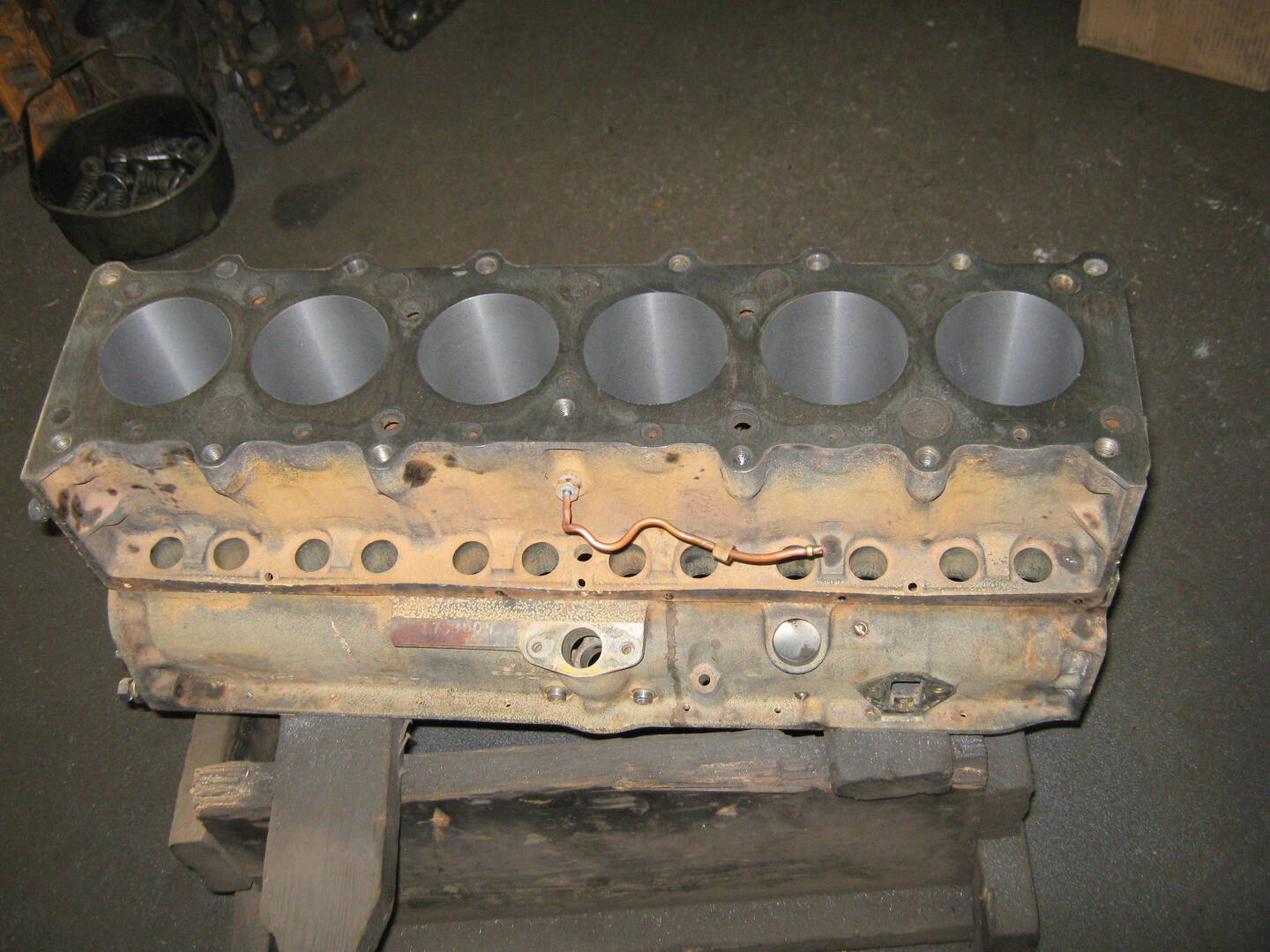
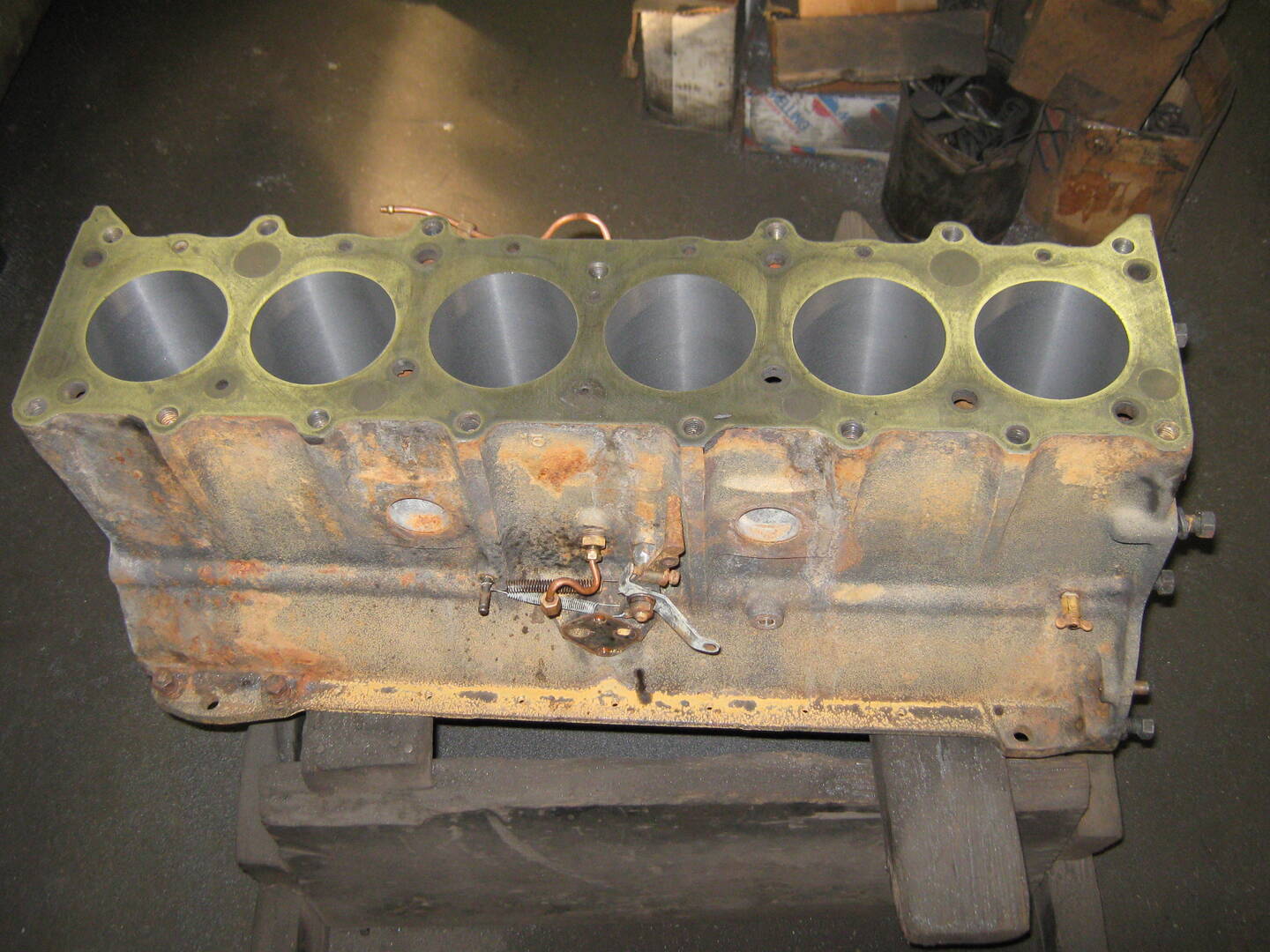
These are pictures I took of my 38's block during it's engine rebuild. To my knowledge this was the only time the engine had been opened so this should be factory. Hope they help.
7046 old site posts
Save a life, adopt a senior shelter pet
There are many good people. If you can't find one, be one.
1938 Master Business Coupe-Sold, now living in New Jersey
1953 210 Sedan

Hi James
Look closely at Tiny's pictures and you will see what I think you are referring to as holes filled with weld at the factory.
My '46 block had those same areas.
But... I don't think they are welded, they are corroded from being exposed to an open area in the head gasket which corresponds to an opening in the head.
If you were to plane enough off the block surface, that corroded area that looks like weld would disappear.
I have no idea why the 216 had more coolant holes in the head and gasket than in the block, but they did.
That's just the way they were. 🙂
PS
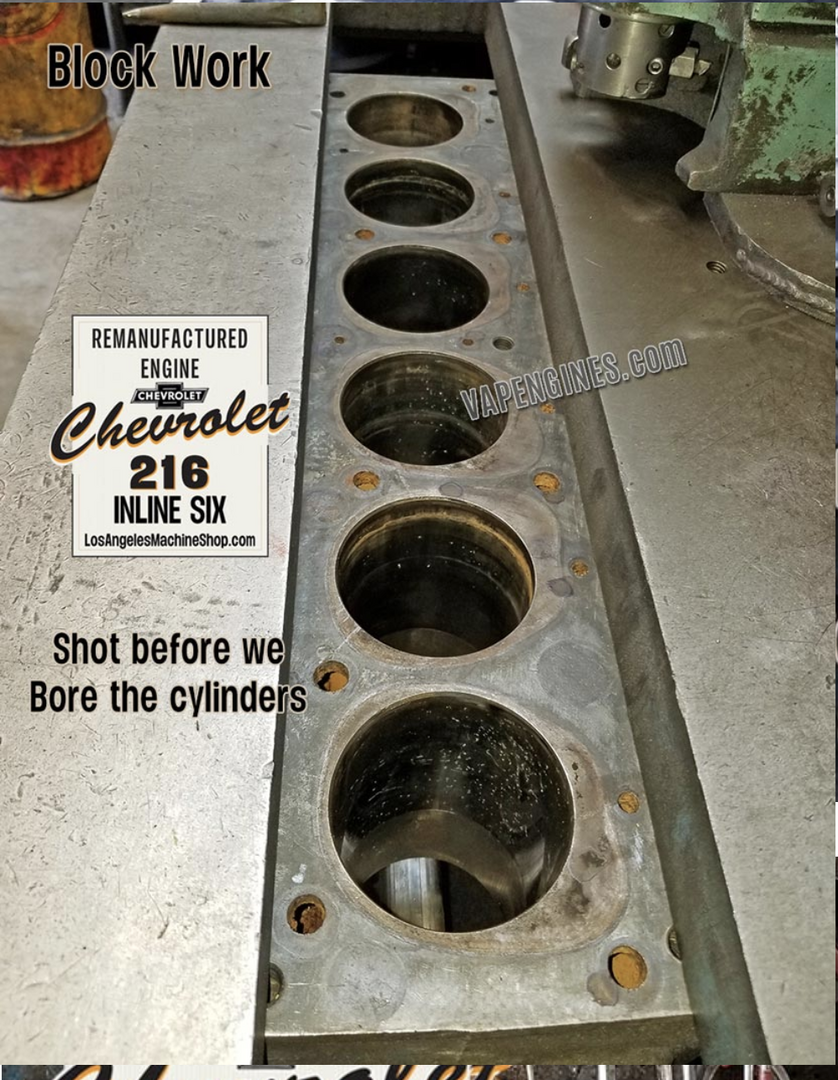
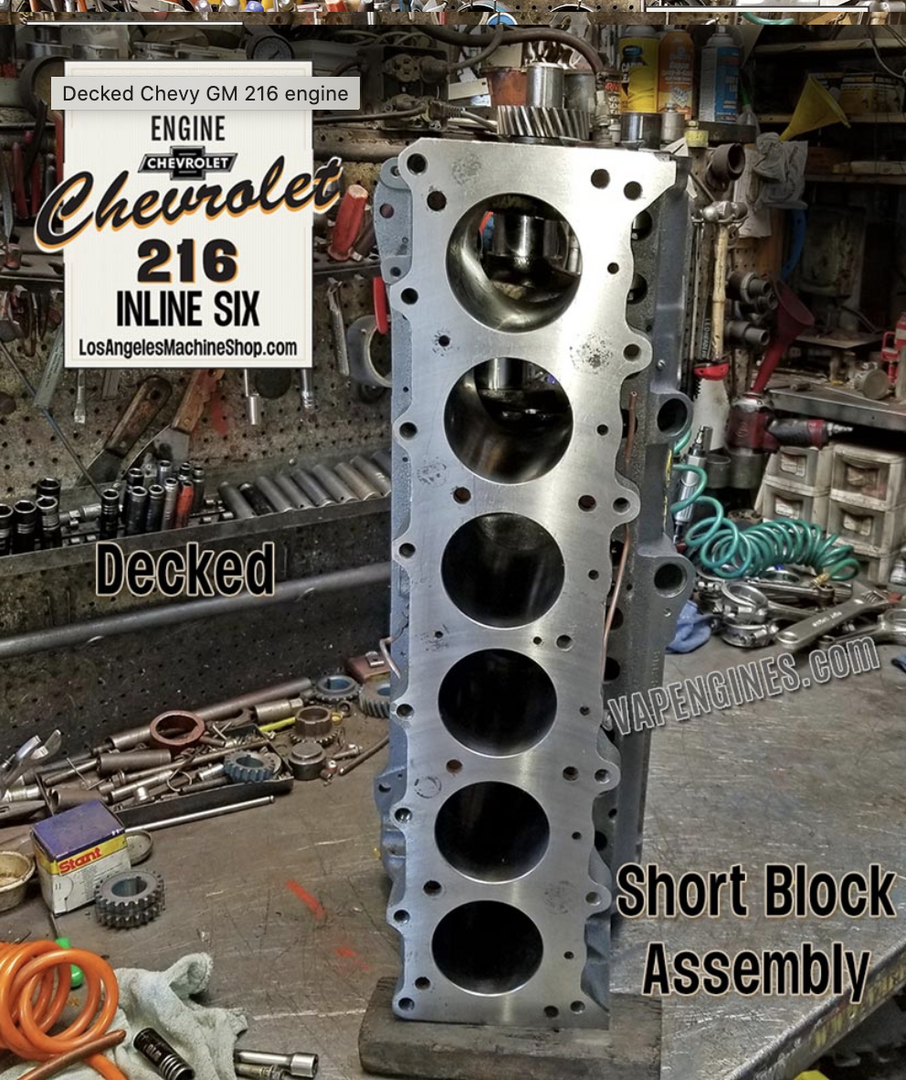
Here is a web site with pictures of a 216 rebuild:
https://losangelesmachineshop.com/remanufactured-chevy-216-engine-builder/
Even though it is a 1940 or later block, the coolant holes are the same, and there are more of them in the head than the block.
The picture of the planed block shows most but not quite all of the corroded areas planed away.
Hope that helps.

Ole S Olson
Saskatoon, Sask, Canada
1946 DR 3/4 ton stake
1139 old site posts
Tiny and Ole,
Thanks for your replies and the pictures. Ole’s explanation of the corrosion on those spots makes absolute sense. You have solved this mystery for me—though it is still an interesting question about why the head passages and the block passages don’t correspond exactly.
Jim