
Reproduction Parts for 1916-1964 Chevrolet Passenger Cars & 1918-1987 Chevrolet & GMC Trucks SHOP ONLINE | ONLINE CATALOG | ABOUT US

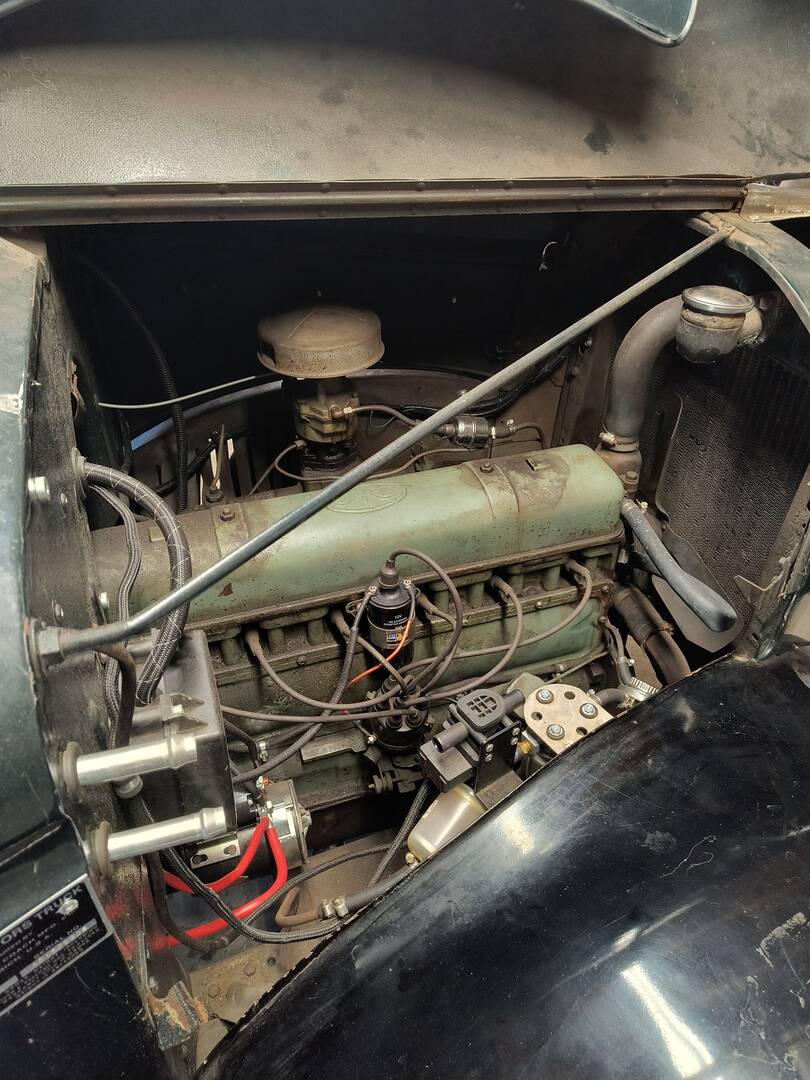
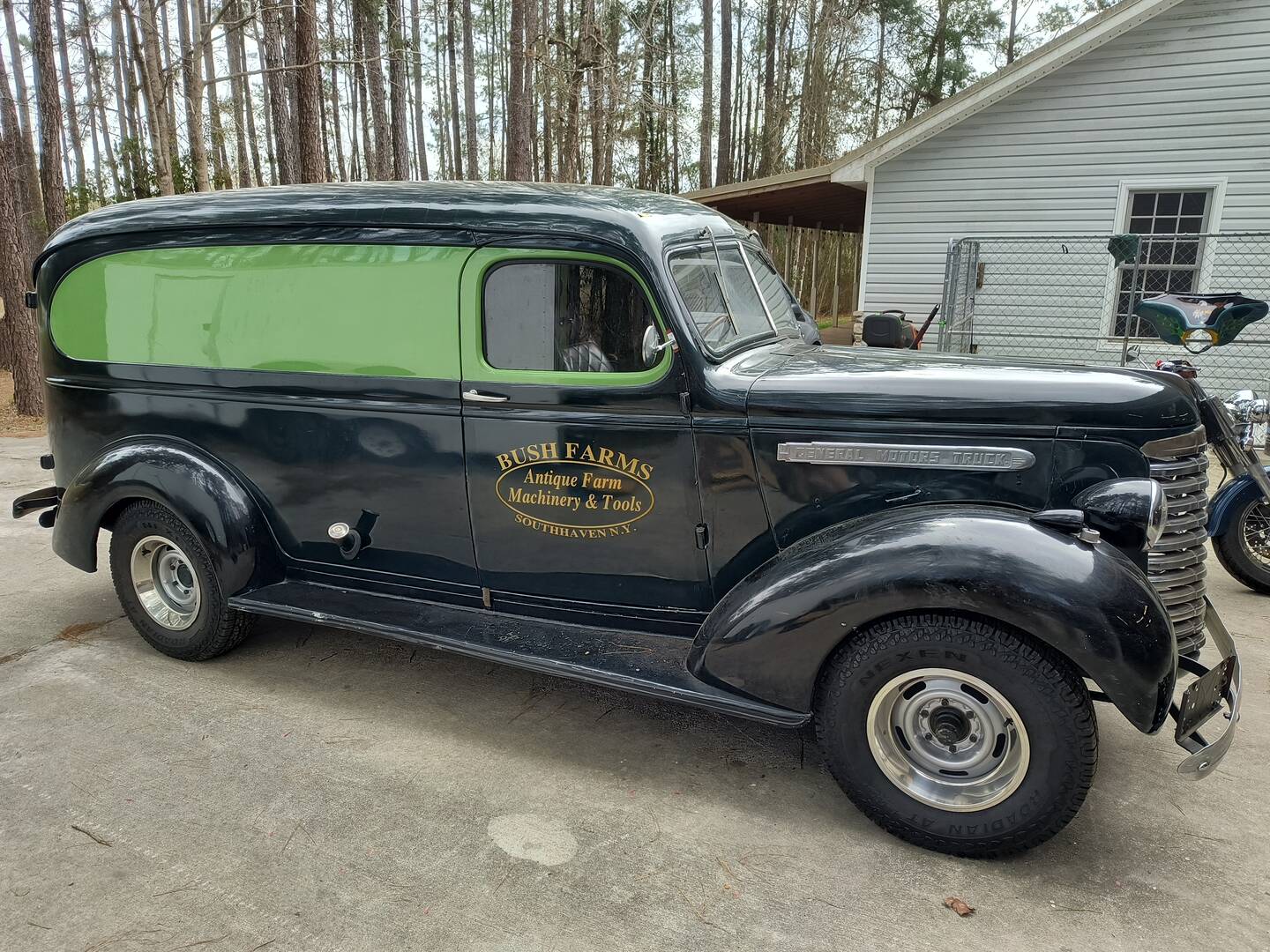
This post is about speed. I made another post about a different topic and got some GREAT input back, so here is another post looking for input from people with experience with antique vehicles. SO, i have a 1939 GMC Panel Delivery Truck equipped with the original drivetrain of an inline 6 cylinder motor with a 4 speed tranny (3 fwd., and 1 reverse) and i am assuming the standard rear end differential. What should the top end speed of this vehicle be??? It gets to 40 MPH easily but then it starts to sputter and break up and run poorly. The previous owner said he never drove it over 40 and he really didn't know. The fuel system has an electric fuel pump that was upgraded to 12 volt and the pressure regulator after the pump is set at its lowest setting "1". My next step is to increase that setting and test drive it. I am enclosing a pic of the present carburetor and i am assuming it is original but i do not know for sure. If i increase the fuel pressure and see no results, my next step would be to disassemble the carb and do a thorough cleaning of all the jets, passages and fuel bowl. Any inputs are appreciated. It is obvious to me that i am getting input from people who have forgotten more about antique vehicles than i will ever know.
Also, a question about where the oil filter shown in the picture gets its' oil supply FROM the motor and where the RETURN line taps back into the motor. It has all been disconnected and i am assuming the motor connections have been plugged....thanks again for your help!


So, right up front, I know next to nothing about American GMCs.
But I do know that in Chevrolets of that time period tire diameters and axle ratios of the various truck sizes were matched such that engine speeds between a 1/2 ton or 3/4 ton or 1 ton at any given road speed were not that much different.
Having said that, my '46 has the original engine as well as the rest of the drive train.
That includes a 4 speed transmission (which is irrelevant as they are all direct drive in high gear anyway), a 4.57 Eaton rear end, and 7.00x15 tires with a relatively high profile for truck use.
I usually run at 50 mph on the highway, and sometimes hit 55 when I'm not watching close enough. 🙂
Keep in mind though that this truck is in pretty good shape, steers great, never shimmies and has good brakes, and that's on a good smooth highway.
I don't know about your engine (is it still the 228 cid ?), but the 216 was actually "gross" rated at 3300 rpm and rated "net" at 3100.
Been a while since I calculated it, but I think I'm running about 2750 or maybe 2800 max at 50 mph and the engine sounds fine at that speed.
Ole S Olson
Saskatoon, Sask, Canada
1946 DR 3/4 ton stake
1139 old site posts
Regarding your oil filter, I can't say anything for sure about that either, but normally the oil going to the filter would be tee'd off the line to the oil gauge somewhere.
I see a splice in what looks to be your oil gauge line below and in front of the filter so that may be where yours was coming from.
It looks like the oil gauge line on GMCs is coming from the front end of the main oil gallery, and in many pictures I am seeing the filter mounted on the front right of the engine, so it's probable that originally it was tee'd off the fitting at the front of the oil gallery.
That also suggests to me that the original return to the crankcase MAY be a plug found on the right side of the block somewhere around the fuel pump area.
Just guessing though. 🙂
I hope someone else jumps in to correct me if I'm wrong here.
Ole S Olson
Saskatoon, Sask, Canada
1946 DR 3/4 ton stake
1139 old site posts

Must likely you have a very low gear differential. Someone like Mike will have to give feedback as to the exact ratio. My guess would be that, if you're wanting to drive more closely to highway speeds, that you should start looking for the rear end out of a Powerglide car to retrofit into your truck. Years ago I had an early 55 Chevy panel truck with a full pressure 235 and a granny gear four speed out of a 2 ton truck. (BTW your truck is a three speed, reverse isn't counted when counting "speeds" on a transmission) I don't know the exact gear ratio but 45 was the sweet spot. It would go 60 but was winding tight at that speed. While driving that slow was a challenge at times, I grew to appreciate it because it forced me to take the time to enjoy the scenery as I went by. Keep in mind when looking for ways to increase your speed, handling and stopping are also important. The suspension and brakes were not designed for high speeds.
7046 old site posts
Save a life, adopt a senior shelter pet
There are many good people. If you can't find one, be one.
1938 Master Business Coupe-Sold, now living in New Jersey
1953 210 Sedan
@tiny Thanks for your input. Hey, if 40 mph is what it is supposed to do, that's fine with me, but i just want to know. Are there any stamped numbers or anything that will tell me what my rear differential gear set up is? Even at 40 MPH, the breaking isn't real good. The pedal is hard and all of the wheel cylinders have been rebuilt, but stopping in a hurry ain't happening. I'll look into the oil filter hook ups. There is nothing about the oil filtration in the '39 shop manual under the lubrication system....on we go!How do i tell the Cubic inch displacement of the motor?Are there numbers somewhere on the motor?


My trucks are most enjoyable to drive at speeds under 50 mph. They can and have been driven faster, but it’s less enjoyable IMO.
As for the brakes description referenced, my guess is there may air still in the lines and it needs to be removed by bleeding.
I actually drive 50 on the highway to try to be at least somewhat near the flow of traffic.
But my favorite cruise speed is actually around 35 to 40 mph.
Saskatoon has a street called Spadina Crescent that runs along close to the river for miles.
The speed limit is 50 Kph, but you won't get a ticket at anything below 36 Mph. 🙂
Interestingly, the engine actually sounds smoother at 50 or even 55 than it does at 45.
Ole S Olson
Saskatoon, Sask, Canada
1946 DR 3/4 ton stake
1139 old site posts

Your panel truck should have a 228 engine, the rear axle, if stock, is probably a 4:11 gear. My truck's sweet spot is around 35 to 40 mph, it will do 45 but the engine really doesn't like it.

It would not hurt to check out all of your ignition components in regard to the high speed sputtering. A wise man on this forum once said 90 percent of carburetor problems are ignition.
Dave
Hi again
I found some more information for you.
To determine whether or not you have the original 228 engine, or some other displacement engine has been swapped in...
This list of casting numbers on the Inliners website should help:
https://www.inliners.org/casting/numgame.html
Patrick (who posted above) is a GMC man and undoubtedly will be able to tell you where to look for the numbers on the block and head.
Regarding the oil filter...
I found this:
https://www.facebook.com/groups/47.54ADTechSwap/posts/2208278322694968/
which essentially confirms what I posted above.
The filter seems to have been originally added to the front right side of the engine.
The line to the filter tee'd off the fitting at the front end of the main oil gallery, and the return line dumped back into the crankcase through a fitting located under where the distributor is mounted.
Hope that helps. 🙂
PS
I vaguely remember reading somewhere that possibly the first 3 numbers of the engine serial number were the displacement.
Maybe Patrick can confirm this?
Ole S Olson
Saskatoon, Sask, Canada
1946 DR 3/4 ton stake
1139 old site posts
Hi Patrick
I vaguely remember reading somewhere that the serial numbers stamped into GMC engines maybe contained the displacement as the first 3 numbers.
Is this true?
Ole S Olson
Saskatoon, Sask, Canada
1946 DR 3/4 ton stake
1139 old site posts
Hi hoseman-2
I nearly forgot about your brakes.
You say that "The pedal is hard" so that suggests you don't have any significant air in the lines (otherwise the pedal would be a bit spongy).
And if the brakes are set properly, your brakes should be coming on by the time the pedal is pushed down about 1/3 of it's travel.
If these things are fine...
You say the wheel cylinders were rebuilt.
Were new shoes installed?
If so, were they first ground to the radius of the drums?
This is necessary for full contact of the shoes with the drums, and is a procedure that may be overlooked by a shop no longer used to servicing old drum brakes.
If it was needed but not done, you will have poor brakes
Here is a good video to show what I'm talking about:
Ole S Olson
Saskatoon, Sask, Canada
1946 DR 3/4 ton stake
1139 old site posts
@dunfire Patrick, How do i positively identify the motor displacement and rear differential gear ratio that i do have in my Panel Delivery Truck? Are there numbers stamped on the motor / differential that will tell me. From what you posted you are basically saying that i should be satisfied with cruising at 40 MPH, which i am, but the roads all around where i live are 40 and above. I would probably need to mount a slow moving vehicle triangle on the back of the vehicle.
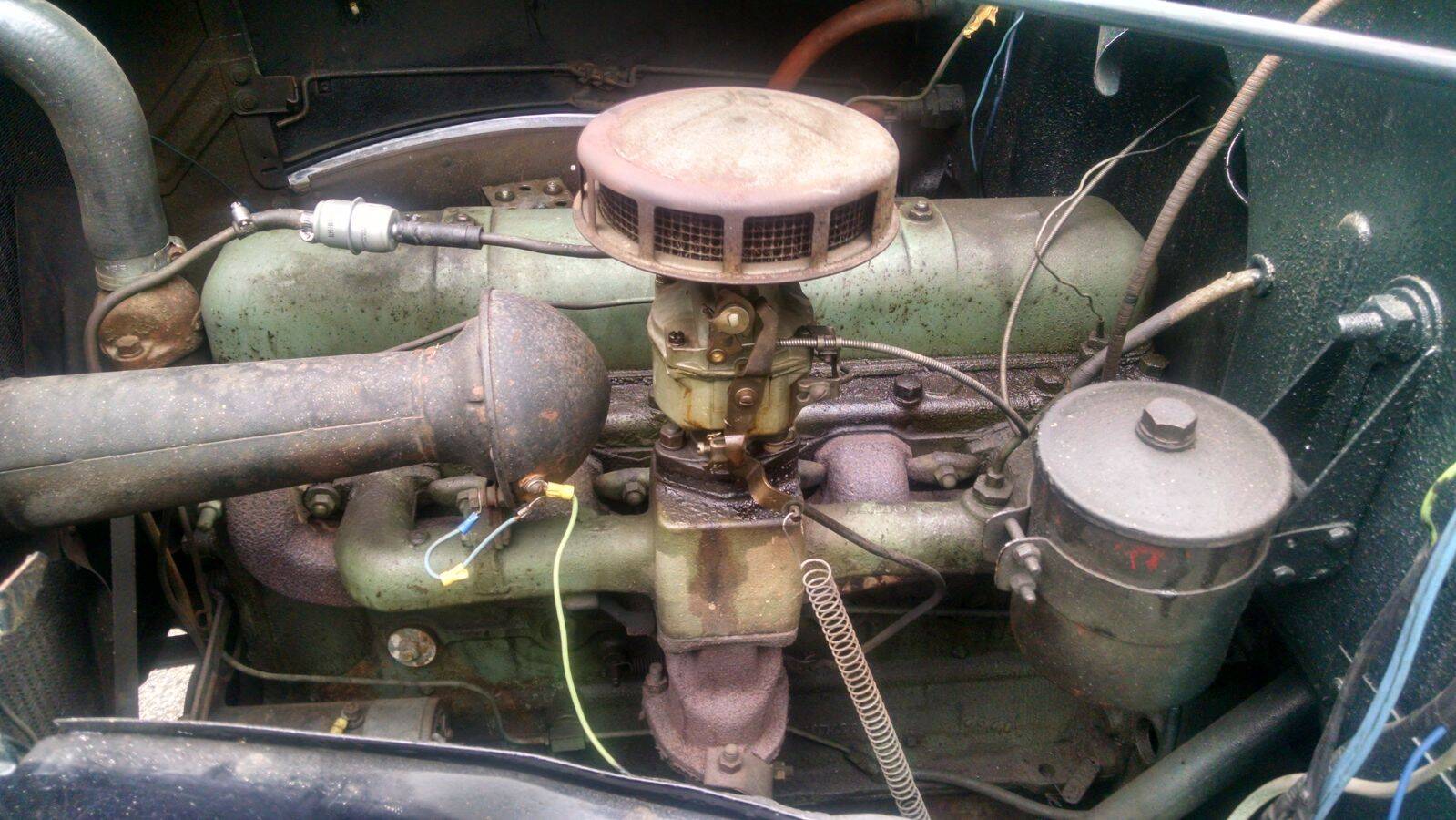
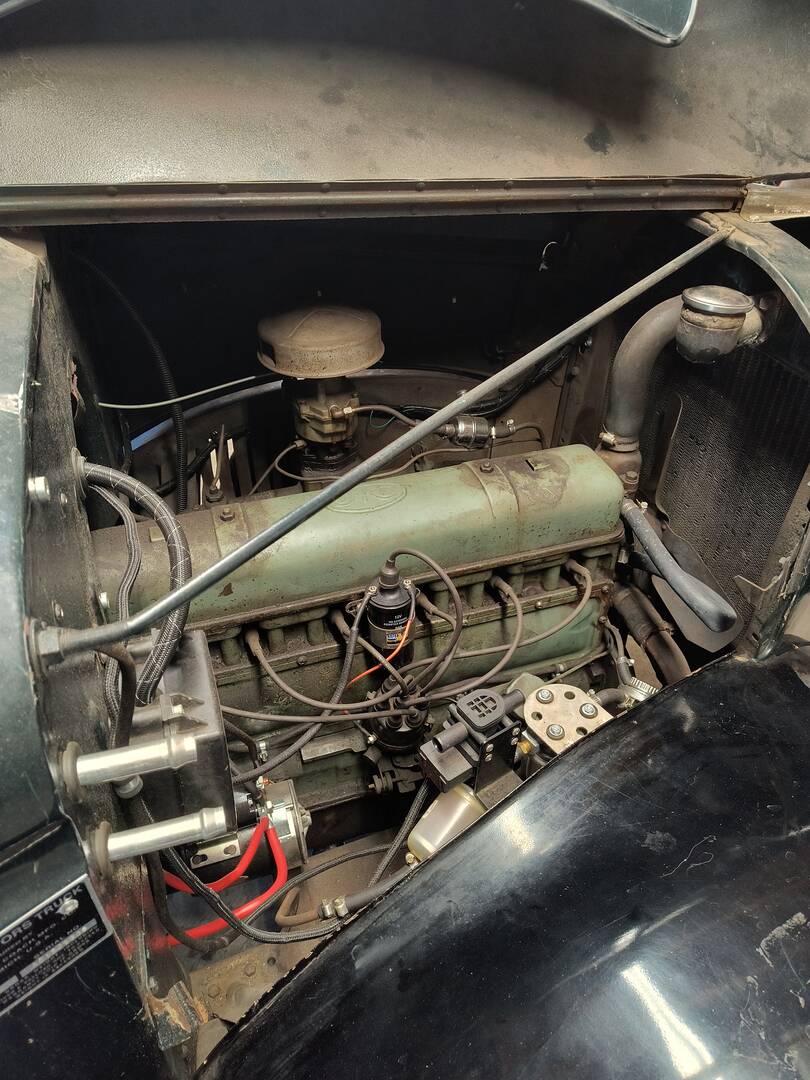
Here are two pages from the Old GMC truck site that identify the motor to the truck. The serial number for your panel is stamped on the right side of the frame between the front axle and rear spring perch. Do you have the serial number from the data plate? If so, what is it?

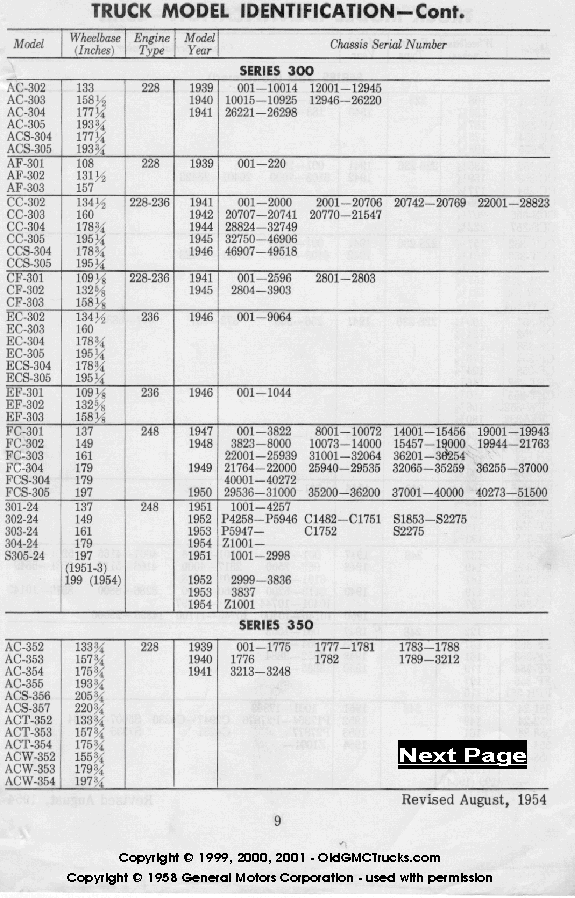
Here is engine decoder page from the Old GMC site.
