Reproduction Parts for 1916-1964 Chevrolet Passenger Cars & 1918-1987 Chevrolet & GMC Trucks SHOP ONLINE | ONLINE CATALOG | ABOUT US

Piston rod bearings looked really good until 3 & 4.
Decent wear on the pistons. New to engine building.
Can these pistons be reused with this type of wear?


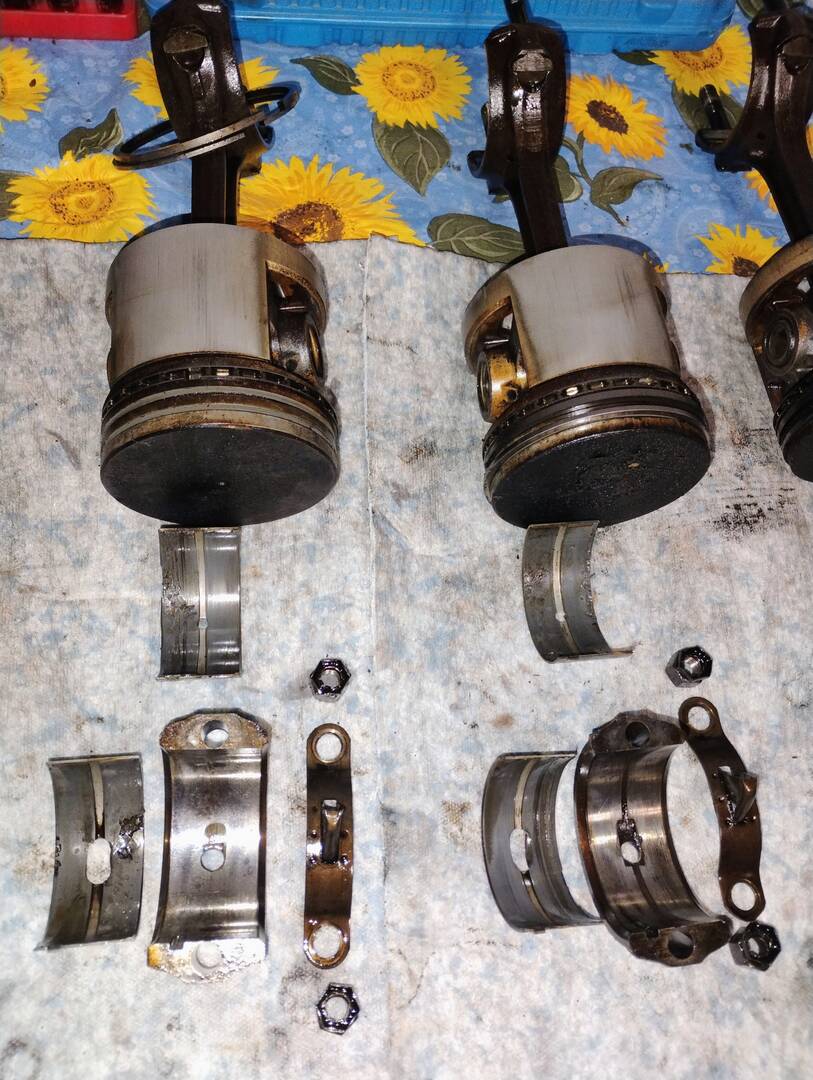


A member over on stovebolt forum said the rod bearings I have here are hard to find or really expensive. Does that hold true?

I have read the same thing, but have no experience with trying to find them myself.
It does look like this engine has really been "gone through" by the previous rebuilder.
Aluminum pistons, rods bored for shells in place of the original babbitt, and crank journals ground undersize.
Original parts (with the exception of main bearing shells for 1948 to '53 engines) are probably easier to find, especially for engines extant during the war.
PS
If it were me in your spot, I'd keep looking for a good dipper engine.
They are out there.
And it would preserve the original look of an otherwise very original looking truck (with a family history as well). 🙂
PPS
I always like people's reactions when I open the hood and they see the original engine, and not an obviously anachronistic later 235. 🙂
Ole S Olson
Saskatoon, Sask, Canada
1946 DR 3/4 ton stake
1139 old site posts
Well a local machine shop said he has his sources and I have been told they are really good. Gonna bring what I got by them maybe in Jan see what he says.
Still looking if anyone runs across a interesting listing feel free to share :). Shipping is crazy expensive so that keeps me limited.
Another possibility...
You haven't opened up your original 216 yet, right?
It might just need reboring for oversize pistons, clean up the head, remove shims etc.
NOS oversize cast iron pistons are still available (check Ebay).
I have a set of NOS .040" over pistons, a full set of NOS babbitted rods that I found on Ebay, and lots of other parts sitting on a shelf just in case.
The rods came for the Netherlands, where war time parts stock still exists. 🙂
Ole S Olson
Saskatoon, Sask, Canada
1946 DR 3/4 ton stake
1139 old site posts
This is true, I have yet to see what the original engine looks like. That would be pretty cool if it is salvageable. I am waiting for a warmer weekend to get into it.
I do have this other 216 I got from NE that was fully running but had been converted to 12v. It has side mounts so must be from a passenger vehicle.
Did not see it personally but guy seemed straight with me and had sent me a video of this engine running in the car he pulled it from before I went and got it few months back. I could modify the timing cover to fit the front mounts of my truck. Re build one of the 2 generators, and distributers and in theory bring this back to a 6v system.
Once I find a place to store the engine I just pulled apart, like to get this one on the stand and pull the oil pan see how it looks.
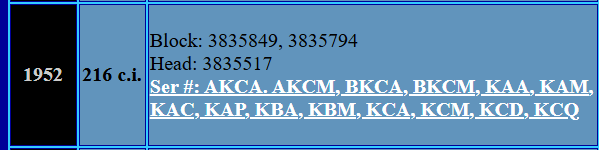
Serial - KAA8II780
K - 1952
A
A - Flint, Michigan
Block 3835794
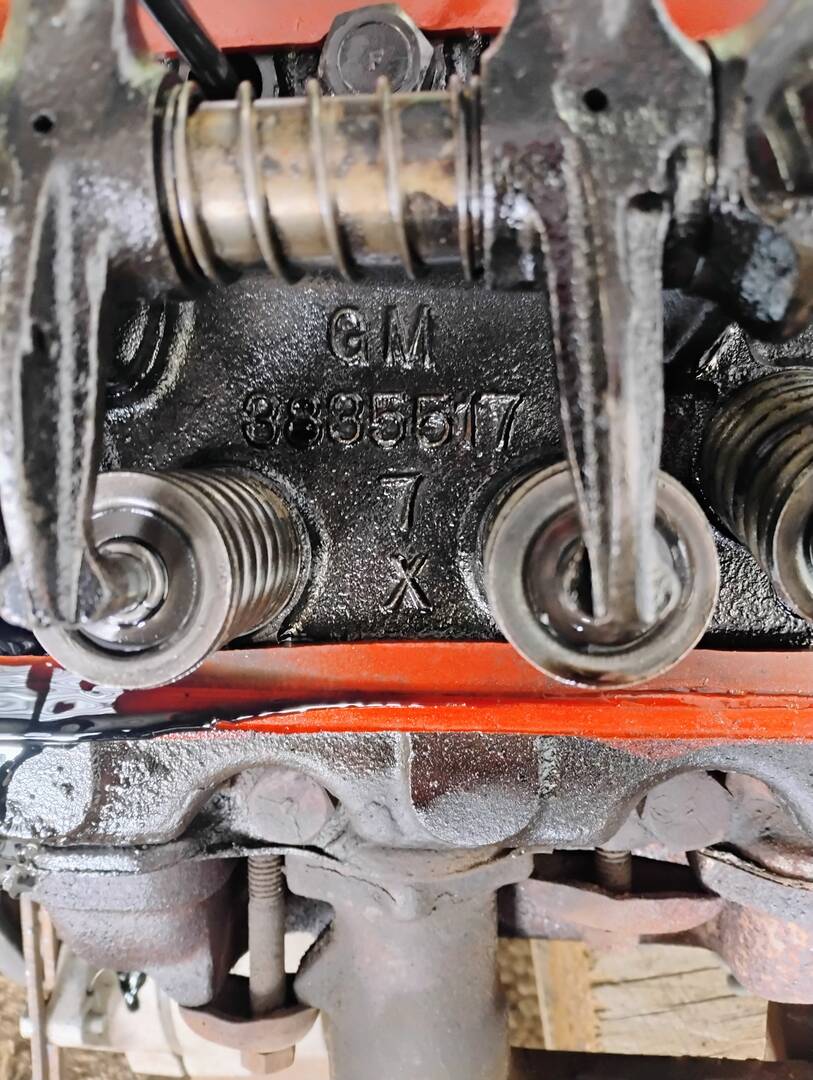
Head 3835517
It would appear the numbers match on this engine.


Ole S Olson
Saskatoon, Sask, Canada
1946 DR 3/4 ton stake
1139 old site posts
I should have tried turning over the original engine through the flywheel, I bet this thing would have fired. Not nearly as rusty inside as I thought it was and the rod bearings look really good. There is a rust spot in the one bore that is decent size but this looks useable. Thought I would need a different engine but I bet this could be used.
I assume that the bores should be at least honed out to get rid of the rust which will probably result in needing larger pistons? There was shims in the rod caps as well.

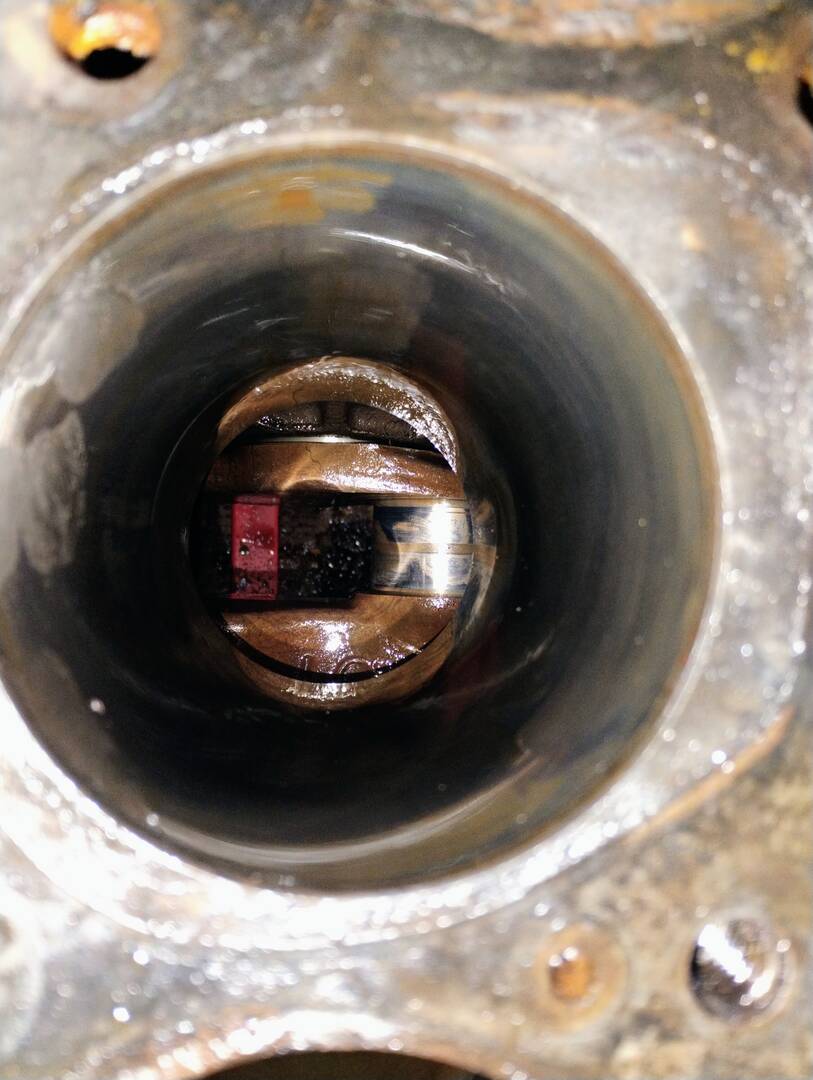


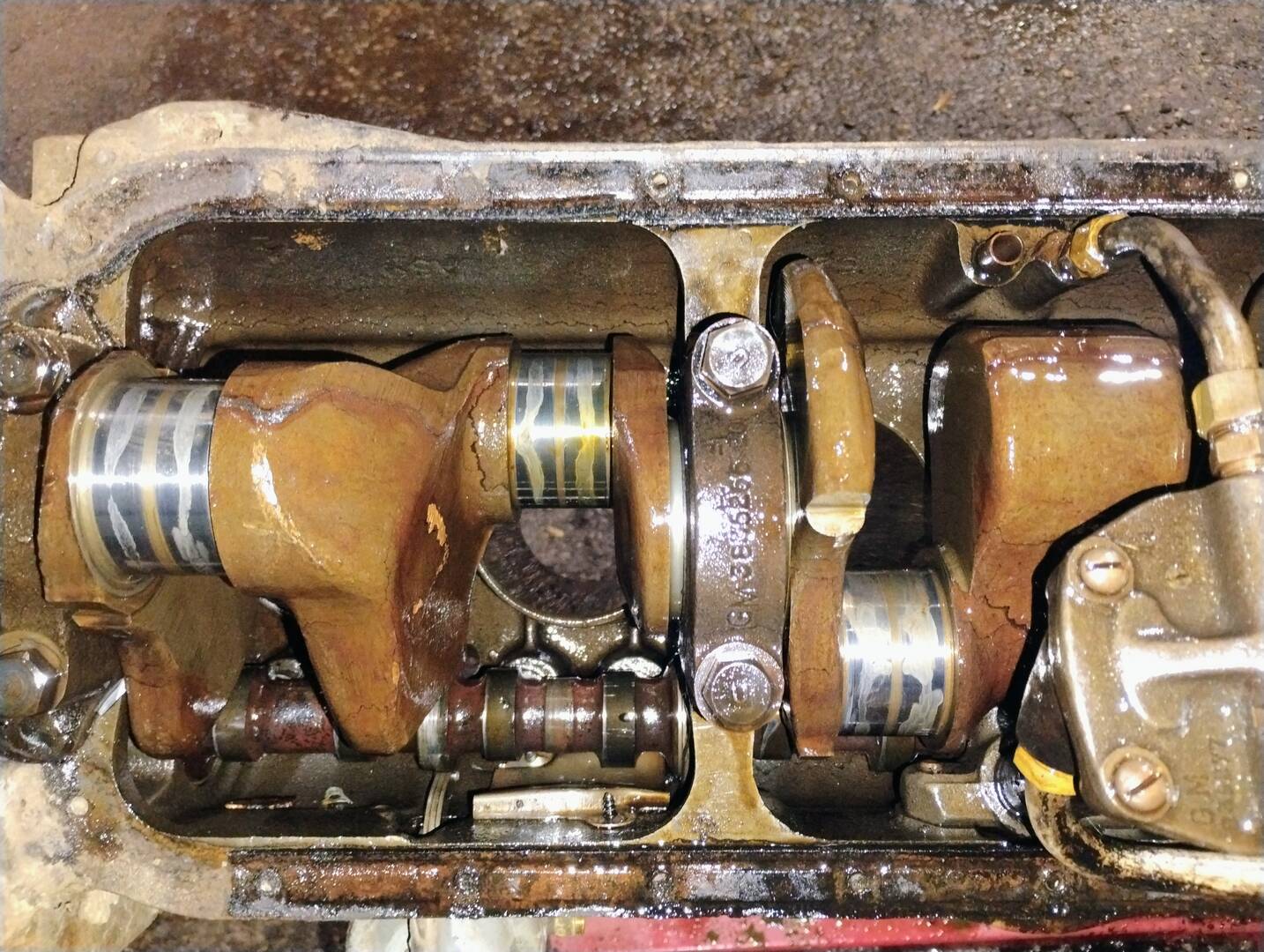


Block is 3835849 so this is not the original engine. That block is a 52 block. Head is 839401 41 - 48 so possibly stock head on a later 52 block.
That definitely looks like an engine you can work with.
The crankcase is remarkably clean inside.
I can't tell from the pictures how much ring groove you have, but judging by the wear pattern on the piston there probably isn't much.
If your piston clearance is reasonable, I'd bet that with a fresh cross hatch with a flex hone, a set of rings, and a bearing adjustment, you could be good to go.
It's sometimes surprising how much you can get away with in regards to pitting on a cylinder wall.
I once pulled the head off an old unstyled John Deere D that hadn't run in decades and found one cylinder pretty rusty.
We just wanted to get it running and get rid of it.
The first thing I did was use a scraper to remove as much rust as I could.
Then held a flex hone against the cylinder wall (I didn't have a hone big enough to do a 6-3/4" bore) to clean it up a bit.
Never even pulled the piston.
The tractor ran so well we kept it. 🙂
PS
It was common back then to buy what was called a replacement "short block" from Chev and use your old head, manifolds, carb, distributor, etc.
Maybe that's what you have?
Ole S Olson
Saskatoon, Sask, Canada
1946 DR 3/4 ton stake
1139 old site posts
@ole-olson Could be, from what I can tell there is no serial on the distributer ledge.
I was thinking of taking the block and head to be heat baked to remove as much rust possible from the water jackets. Bad idea?
Also thought at the same time I could have the shop redo the valve seats since there is so much rust around them.
How does one get the oil pump out? From the inside it looks like these are threaded bolts but the outside is perfectly round and do not appear to have seams where it hits the block.

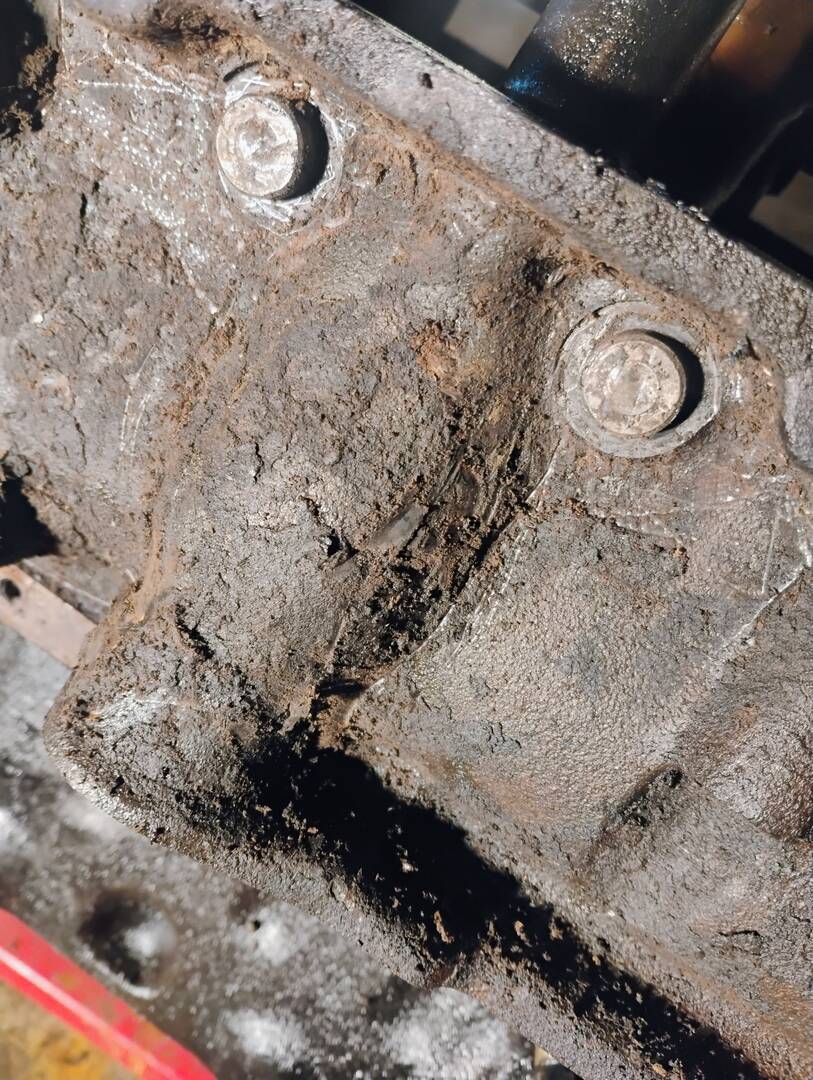
Hi north1941
Do NOT try to remove the part held in by those round headed bolts.
The alignment of the bore in that part to the rest of the block is critical and should not be disturbed.
The oil pump is taken out of that part by loosening the large lock nut visible on the left side of that part as shown in your first picture, right next to the large counterweight on the crankshaft in that same first picture.
The set screw locked by that nut can then be backed out and the oil pump will drop down and out of the bore it is mounted in.
This is of course all after you have removed the oil pump intake screen first by removing the retaining wire, taking the screen out of it's housing, and unbolting the housing from the main bearing cap. 🙂
Hope that helps.
Ole S Olson
Saskatoon, Sask, Canada
1946 DR 3/4 ton stake
1139 old site posts
@ole-olson found it. Thank you!
Got it all stripped down now. The Cam and Main bearings look rather good like the rod ones did.
The cam looks a bit oddly worn though so thinking that might have to be replaced.
Block and Head are off to the machine shop Friday.
Ive also been looking into how people drill and tap the snoot of the crank to pull harmonic balancer on with a bolt.


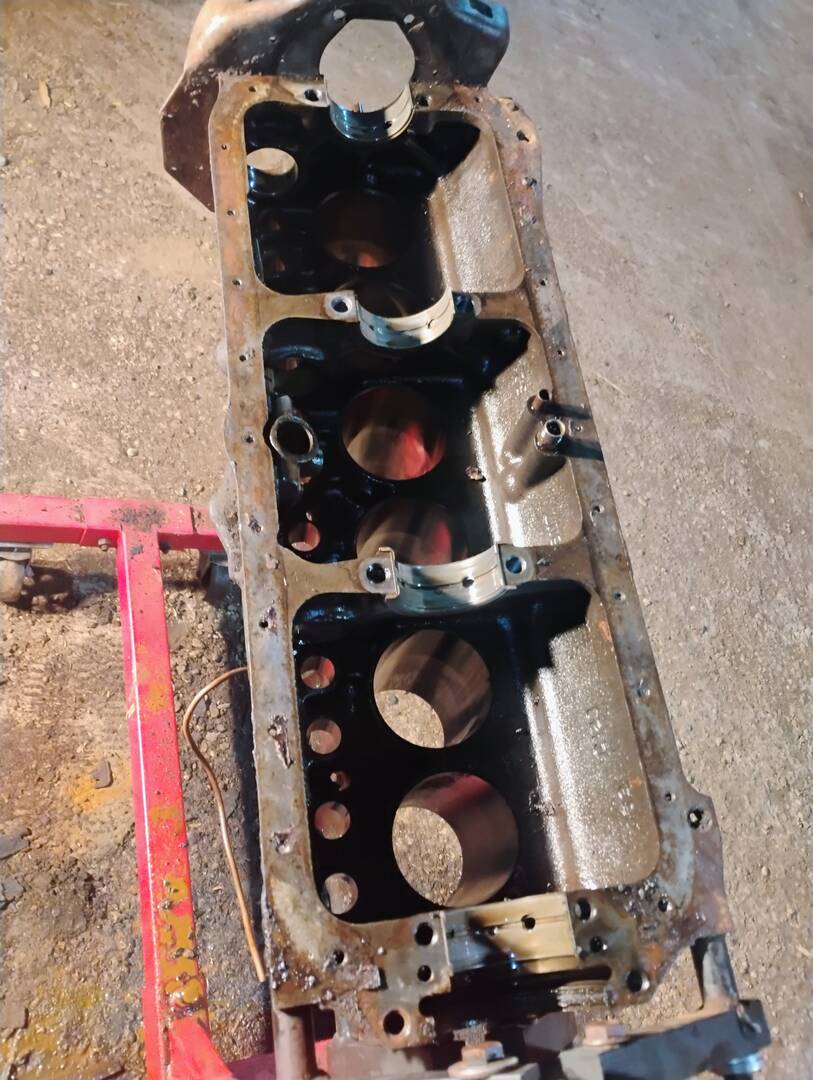

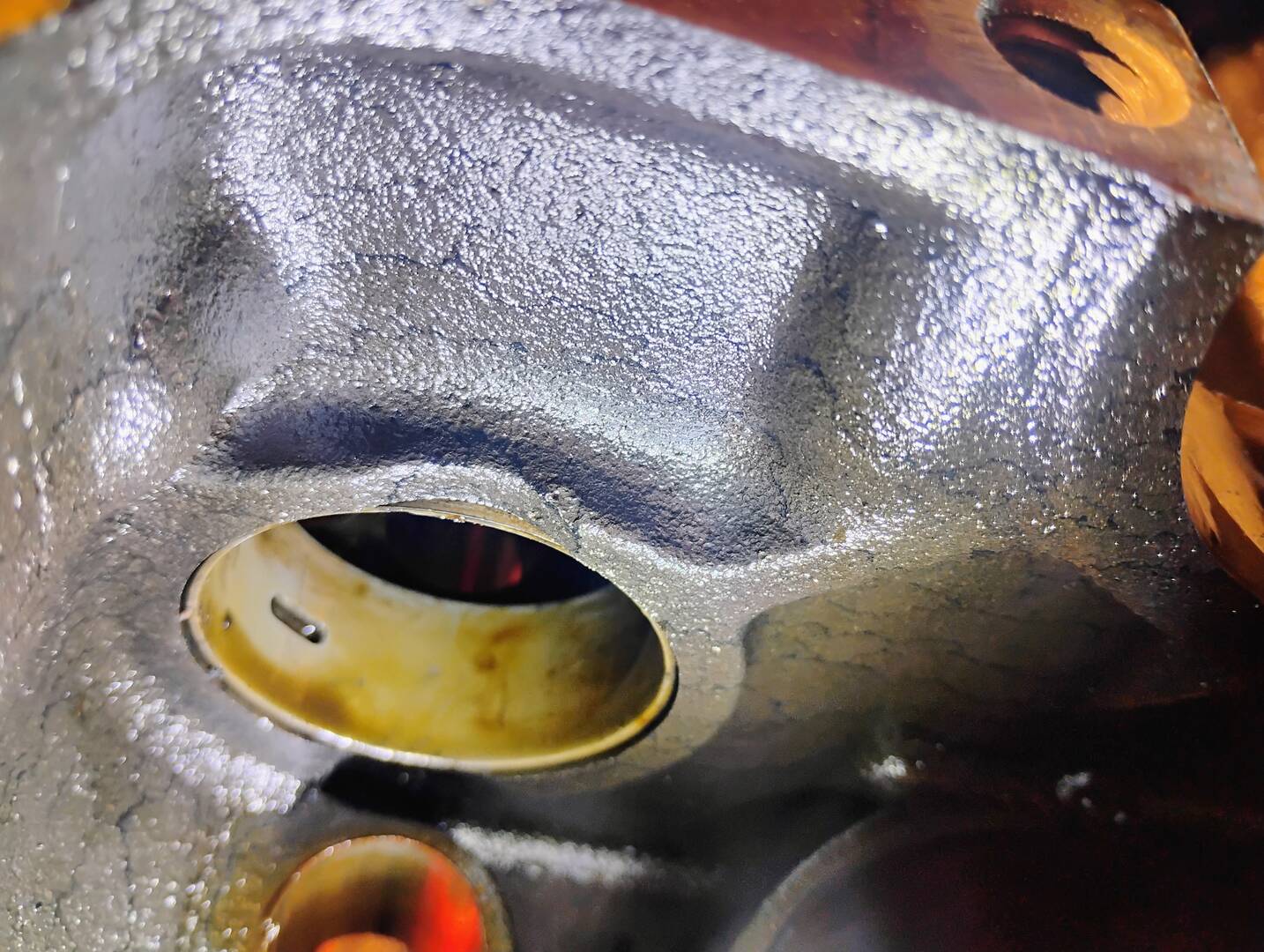
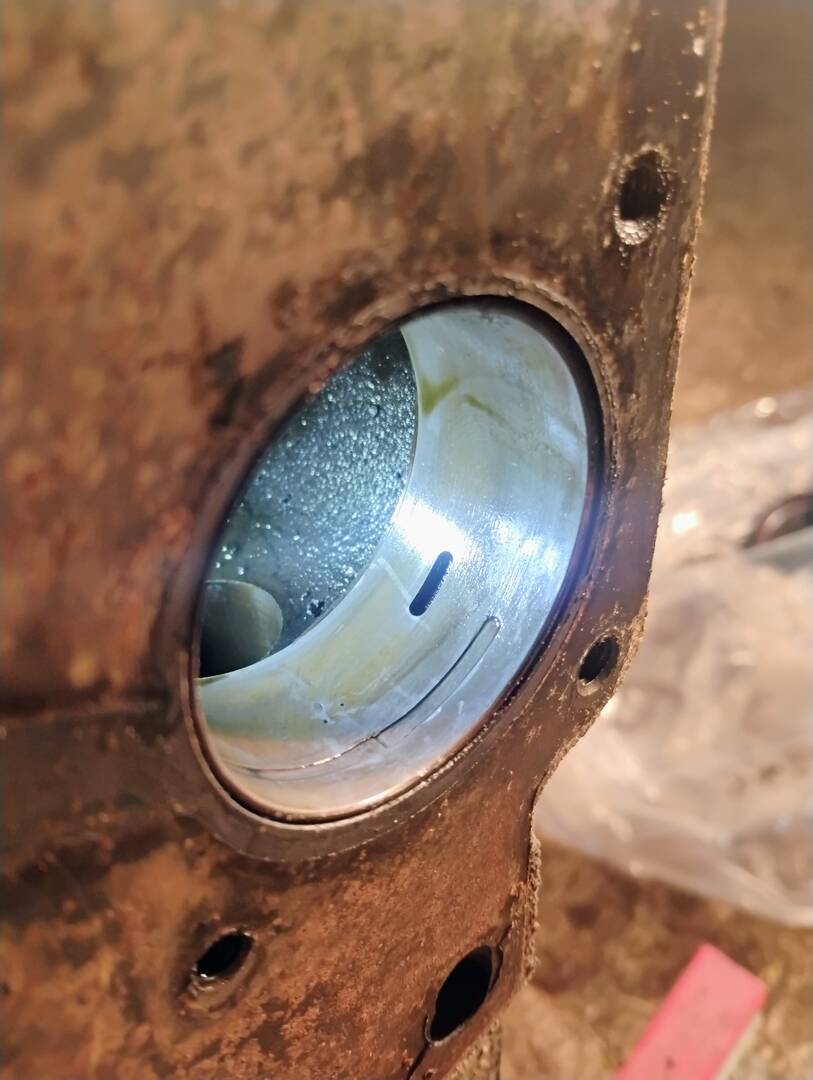

Today I had a nice Facebook find. Got a complete 235 full pressure oiler engine.
Block: 3836233 (2nd series) out of a 1955. Motor is free and ok condition ill post some pictures soon have yet to see what the inside looks like. I am thinking about checking the bores with a scope rather than disassembly. Maybe pop the oil pan check the bearings but otherwise clean the hoses and replaced some cracked ones and try to get it running without a full tear down. Turns over really smoothly just by spinning the fan.
Been diving into making a electrolysis tub to clean my own parts. New heated shop being built 40'x60' finally have a heated place to pull the truck into and work this winter.
The trucks original block and head is at the machine shop, guy works slow but heard good things. Dropped the crank at the only guy near me i could find that does them still. He said the crank was outside of spec and would have to be ground to accept a newer style bearings for the piston rods and so have to use a different rod than the old babit style ones. hopefully see all this before winter hits. Spend the cold months inside getting back together.