Reproduction Parts for 1916-1964 Chevrolet Passenger Cars & 1918-1987 Chevrolet & GMC Trucks SHOP ONLINE | ONLINE CATALOG | ABOUT US

Hi Mike
Right up front... I'm not nearly as knowledgeable as you on Chev wheels.
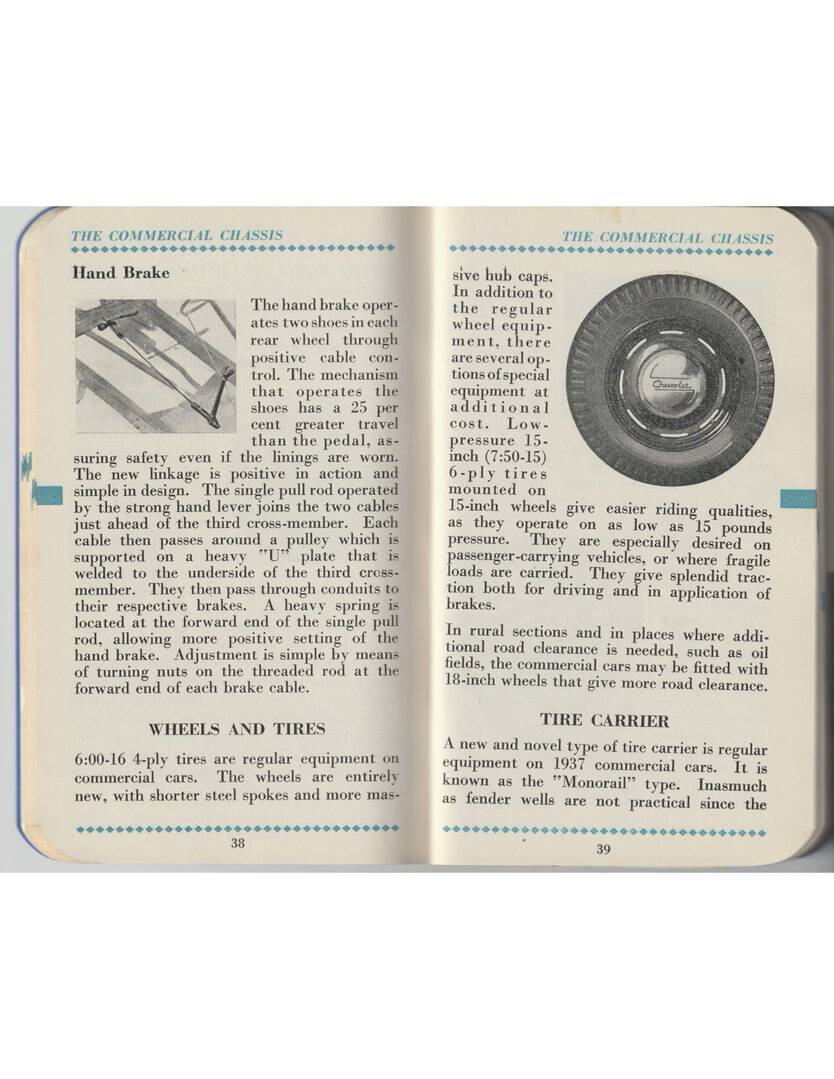
I am lucky enough to have an original 1937 Sales Handbook for Commercial Cars and Trucks though.
Patrick may be referring to what Chev called a "short spoke" wheel used in 1937.
I scanned a page of the handbook showing an illustration of it, but it doesn't make clear if the illustration is of the standard 16" wheel or the optional 15" wheel, or represents both.
I wouldn't call this an artillery wheel, but some might.
Ole S Olson
Saskatoon, Sask, Canada
1946 DR 3/4 ton stake
1139 old site posts

@ole-olson Some who might call that an artillery wheel would be wrong. 1936 Passenger and 1/2 ton trucks used 17' artillery wheels. The "new for 1937" 3/4 ton trucks used a 15" artillery shells. These were continued through 1941, I think, on 3/4 ton models.
The wheel illustrated in your 1937 Truck Data Book is the 1937-1938 passenger and 1/2 ton wheel with the center being riveted to the rim in 8 places, instead of the more common 4 places.
I don't think Chevy ever offered a 16" artillery wheel.
Mike
Many Miles of Happy Motoring
3469 Posts on Old VCCA Chat
Ole S Olson
Saskatoon, Sask, Canada
1946 DR 3/4 ton stake
1139 old site posts

What started our members request was that his wheels on his 37 Chevrolet 1/2 are the same that are on my 36 GMC, 16 inch Kelsey Hayes wheels, It may be that his wheels were replaced sometime in the past? In any case GMC did have the 16 inch wheel in both 36 and 37. Attached is a photo of my wheel .
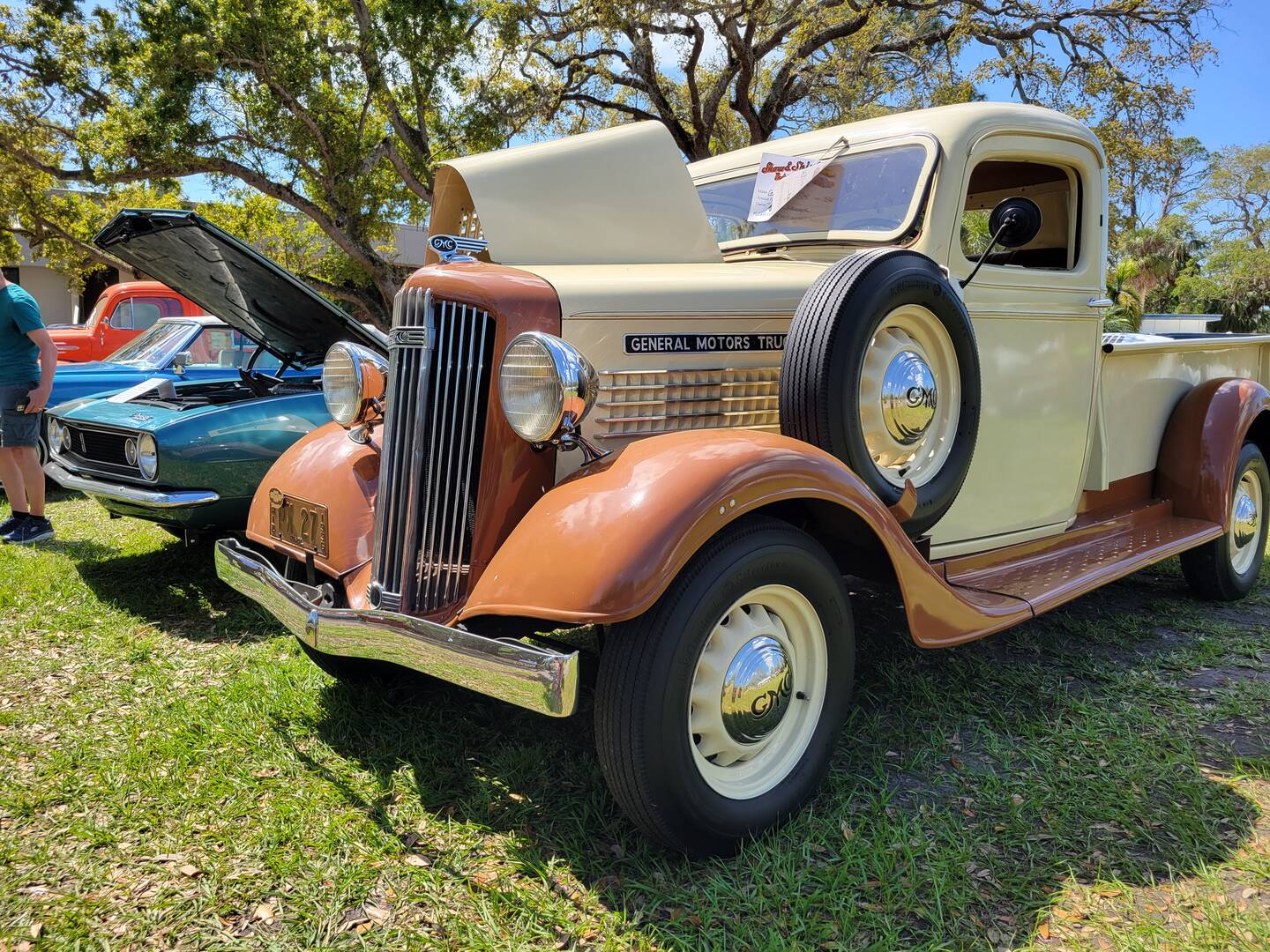
@dunfire @ole-olson @north1941 As I mentioned before, 1936 Chevy 1/2 ton pickups had 17" artillery wheels. I have seen many pictures of Patricks truck and it never occurred to me that his wheels would be different. Perhaps the 16" wheel I have is like those. I just know that it has a larger hubcap opening than what was customary on Chevrolet for 1937-1938. A '37/'38 cap is about 9" across. A cap for my wheel would need to be about 1/2" bigger. The opening in the Chevy wheel is about 8" and the opening in the mystery wheel is about 8-1/2".
Patrick, let's have a measurement of your cap. Maybe we can all learn something here. I was told at one time that my wheel was for a Pontiac. Maybe GMC borrowed more than an engine from their GM sibling.
Mike
Many Miles of Happy Motoring
3469 Posts on Old VCCA Chat
The opening on the rear of a NOS GMC hub cap is 7 1/2 inches I bought a 16 wheel from Bruce Buguy about two years ago, black with a cream pinstrip, that he told that it came from a 36 Chevrolet Master, it was 6 lug and my hub cap fit it fine. If you need, I can pull a hub cap off my spare and measure the distance on the opening of the wheel.

Chevrolet listed the stock wheels for 1937-38 Chevy cars and half ton trucks as "artillery".
They are different than the ones shown on Patrick's 1936GMC truck, but still called artillery, probably to distinguish from them wire spoke type wheels.
Tom
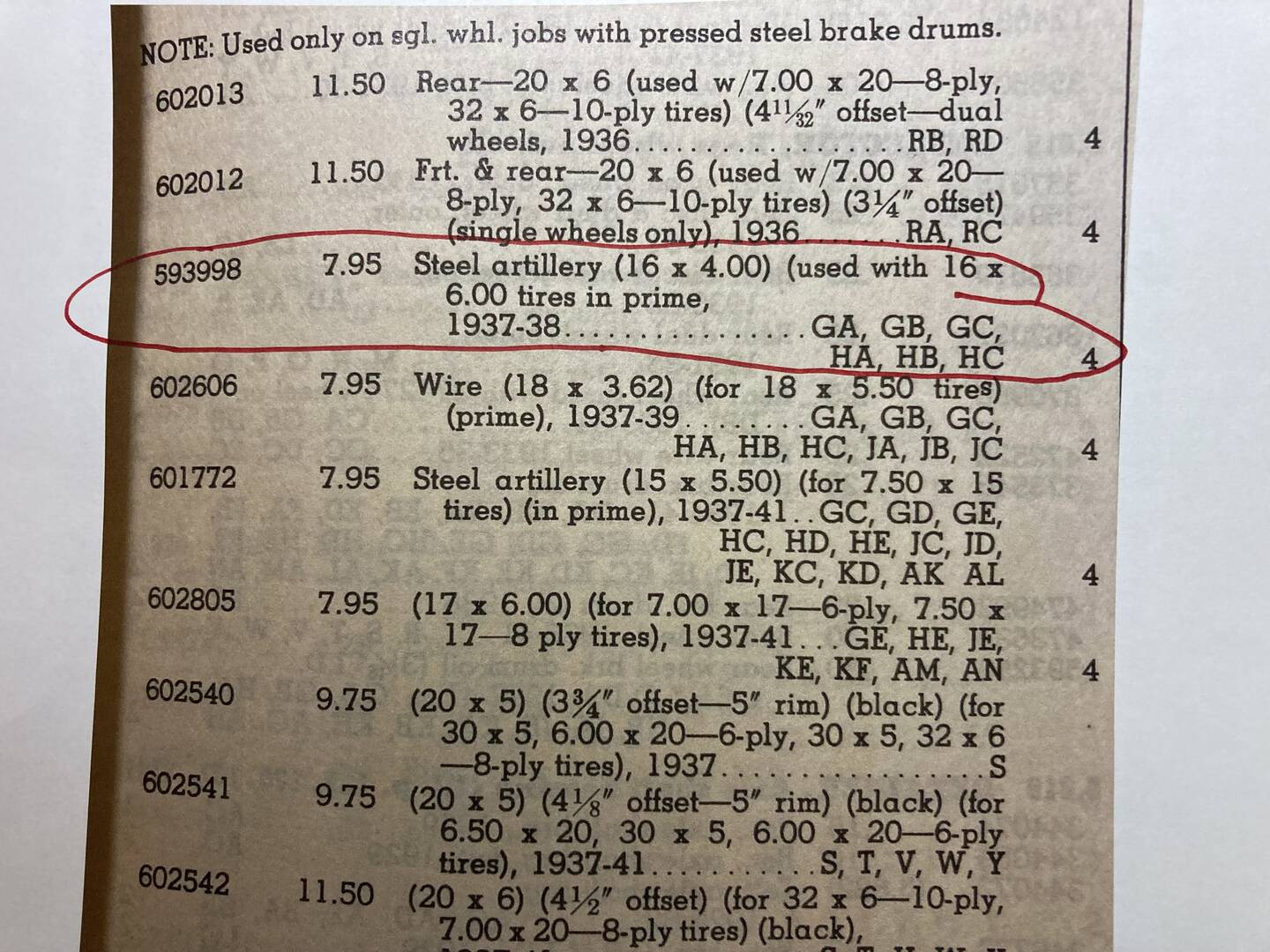
@headlighter @ole-olson Tom, I believe you are correct. That would be the wheel pictured in the info that Ole posted. My apology to Ole for doubting his assessment.
Mike
Many Miles of Happy Motoring
3469 Posts on Old VCCA Chat

Thank you for the rims. Got them back from the tire shop on Friday. Had them sandblasted and powder coated.
Long way to go but the truck has tires filled with air for first time since the 80s :D. Now to remove the transmission from my donor engine and get it into my heated entry. Plan is to strip it down and rebuild it over winter.
Hoping to pull the engine in the truck out this next weekend. Use what I can from the original on my donor, between the 2 hopefully get a clean rebuilt 216 by next spring. Use the existing transmission.
If all goes well possibly be able to drive this thing around next spring / summer.

@north1941 Good to see you on new treads. I was wondering how you were getting along.
I might be able to help with some items for your engine rebuild. Let me know if you want me to look around for stuff.
Mike
Many Miles of Happy Motoring
3469 Posts on Old VCCA Chat
@35mike I will most likely take you up on that.
It's exciting to see it on new treads. Engine is going to be a learning curve but I feel do able with the information available.
Happy Thanksgiving everyone. Spending my 10 degree afternoon tearing down my field donor. So far looks promising, all the spark plugs are oily and free of rust. Engine turns smoothly without any accessories on. Intact glass fuel pump and lines where full of gas still.


Here is the numbers off the donor engine. The block stamp seems to have been stamped a bit wonky. Difficult to clearly see the first numbers. Looks to me to be 130 - (maybe?)


According to a post on the old VCCA forum (vccachat.org), the casting number is a six or seven digit, raised number on the block. Depending on the year of the engine, it could be located next to the distributor (low) or behind the starter. Another clue about the engine is the ID number, which is stamped into the vertical ledge (boss) just to the rear of the distributor.
Here's a link to a web page within the Inliners Club that lists engine casting numbers: Chevy engine casting numbers on the Inliners website
Here's a link to a page that has lots of technical tips for older Chevy trucks: https://www.stovebolt.com/techtips/
Hope this helps. Dean
Dean "Rustoholic" Meltz
San Leandro, CA
3511 posts on vccachat.org
Lurch -1927 LM one ton truck - tinyurl.com/Lurch-VCCACHAT-Gallery
Justin - 1928 AB Canopy Express (1/2 ton truck) - tinyurl.com/Justin-Stovebolt-Gallery
Latest Post: 31 Chevy AE starter switch Our newest member: Tepera36 Recent Posts Unread Posts
